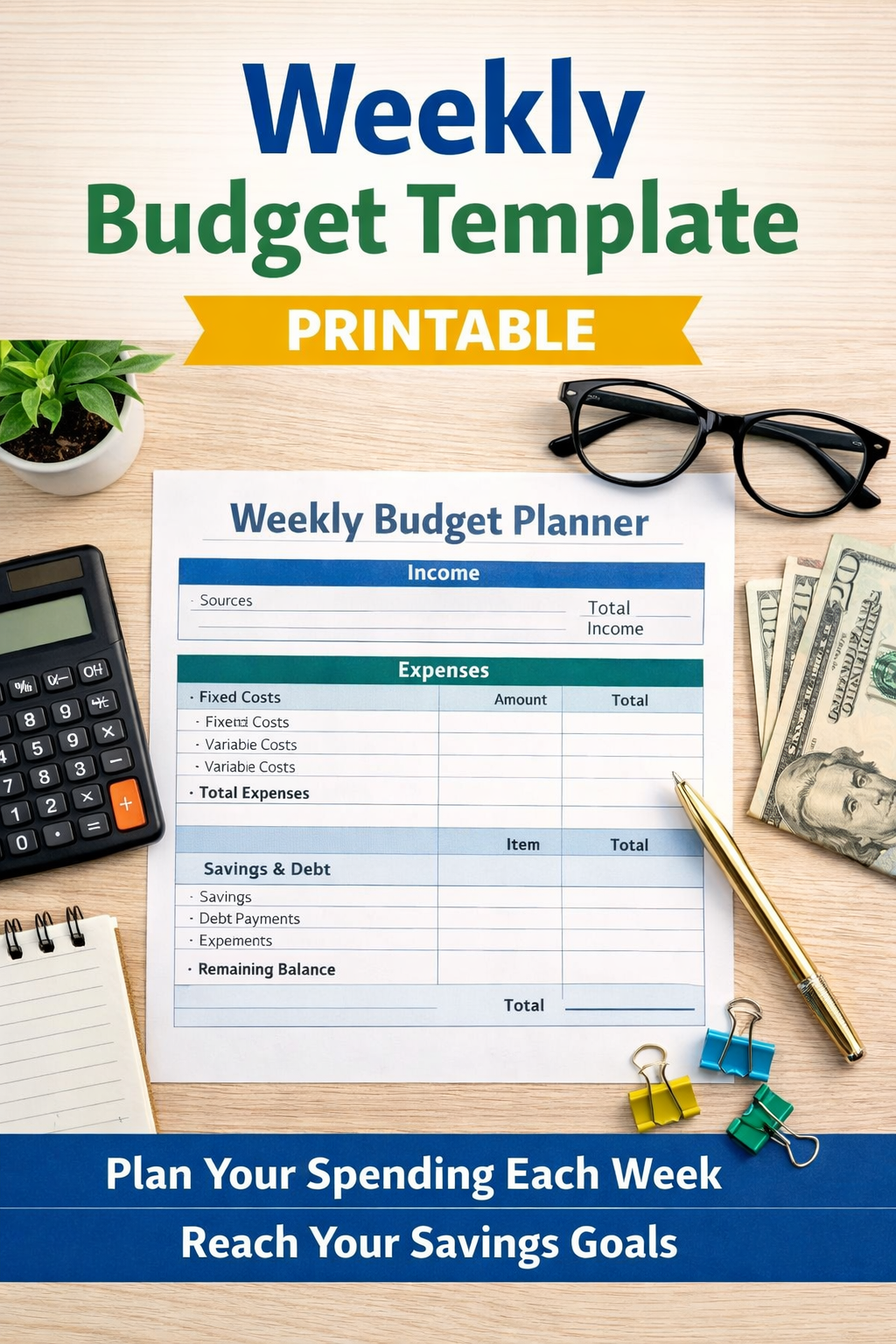
In this guide, you will learn how a weekly budget works, what to include in a weekly budget template, and how to use one to stay on track with your finances. If you prefer planning for a longer period, you can also try using a monthly budget template to organize your finances.
Many people struggle with budgeting because they only review their finances once a month. By using a weekly budget, you can stay more aware of your spending habits and make better financial decisions.
Why a Weekly Budget Helps
A weekly budget breaks your finances into smaller and easier sections. Instead of waiting until the end of the month to see where your money went, you review your spending every week.
This approach can help you:
• catch overspending early
• stay focused on short-term financial goals
• reduce financial stress
• improve spending awareness
Weekly budgeting is especially helpful if you receive weekly paychecks, have variable income, or find it difficult to stick to a monthly budget.
What a Weekly Budget Template Includes
A simple weekly budget template usually includes the following sections:
Income
List any income you receive during the week such as paychecks, side income, or freelance work.
Fixed expenses
These are expenses that stay the same each week or occur regularly, such as transportation costs, groceries, or subscriptions.
Variable expenses
These include spending that changes from week to week like dining out, entertainment, or personal spending.
Savings and debt payments
A good budget template should also include space to track savings contributions and debt payments.
Simple Weekly Budget Example
Here is a simple example of how a weekly budget might look:
Weekly Income: $800
Expenses
Groceries: $120
Transportation: $60
Dining Out: $40
Subscriptions: $15
Miscellaneous: $50
Savings: $100
Debt Payments: $75
Remaining Balance: $340
This example shows how organizing spending by week can make budgeting feel more manageable.
How to Use a Weekly Budget Template
Using a weekly budget template is simple.
Step 1: Write down your expected income for the week.
Step 2: List your regular weekly expenses.
Step 3: Allocate money for savings and debt payments.
Step 4: Track your spending during the week.
Step 5: Review your budget at the end of the week and make adjustments if needed.
Repeating this process each week helps you build better financial habits and stay consistent with your budgeting goals.
If you are new to budgeting, learning how to build a simple monthly budget can also help you understand the bigger picture of your finances.
Tips for Staying on Track Weekly
Here are a few simple tips that can make weekly budgeting easier:
Review your budget at the same time each week.
Use realistic spending estimates instead of overly strict limits.
Track your expenses daily to avoid surprises.
Adjust your budget when necessary instead of abandoning it.
Consistency is more important than perfection when it comes to budgeting.
A weekly budget template can make managing money feel much more manageable. By reviewing your finances every week, you gain better control over your spending and can make adjustments before problems grow larger.
Whether you are new to budgeting or trying to improve your financial habits, using a weekly budget template is a simple step that can make a big difference.
If you are just getting started, reading a complete guide to budgeting for beginners can help you build a strong financial foundation.
About the Author
Hi, I’m Akhila. I created Budgeting Made Simple to help beginners build clear, practical money systems without feeling overwhelmed.
My goal is to simplify budgeting, saving, and debt payoff into steps anyone can follow consistently. Personal finance doesn’t need to be complicated — it just needs structure and clarity.
Leave a Reply