Budgeting is one of the most effective ways to take control of your money, but many people struggle because they don’t have a clear system to track their income and expenses.
A budget planner template makes the process much easier. Instead of trying to remember where your money goes each month, a simple planner helps you organize your income, bills, and spending in one place.
If you’re completely new to budgeting, it helps to first understand the basics explained in our Budgeting for Beginners: The Complete Guide, which walks through the core principles of building a budget.
In this guide, you’ll learn what a budget planner template is, why it works so well for beginners, and how to use one to manage your money more effectively.
What Is a Budget Planner Template?
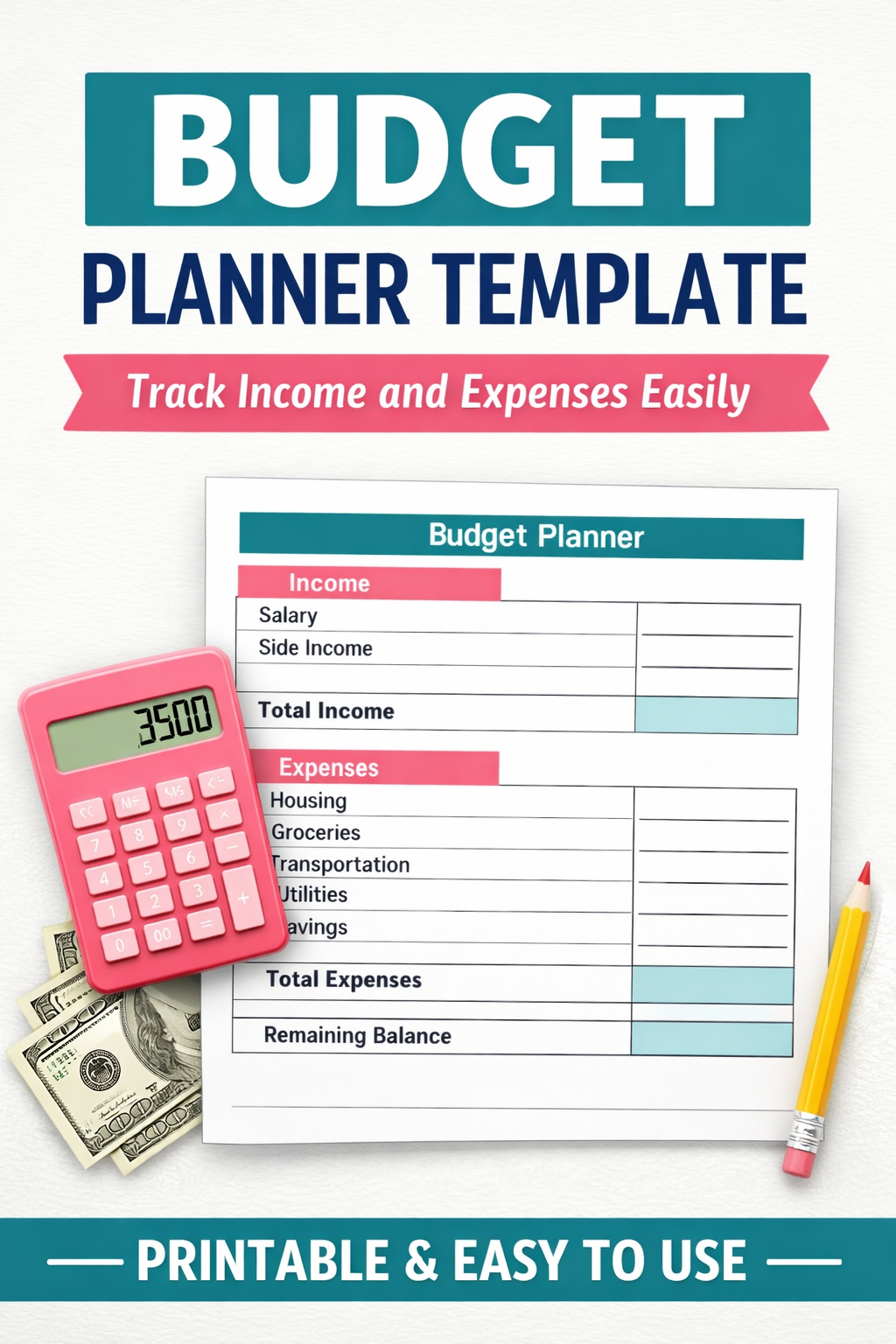
A budget planner template is a simple tool used to track income and expenses over a specific period of time, usually monthly.
It helps you organize:
• income from salary or side work
• fixed expenses like rent and utilities
• variable spending like groceries and entertainment
• savings and financial goals
Instead of guessing where your money is going, a planner gives you a clear picture of your finances so you can make better decisions.
Many beginners prefer printable budget planners because they are easy to use and require no apps or complicated software.
If you prefer a simpler layout, you can also use our Simple Budget Template, which focuses on the most essential income and expense categories.
Why Using a Budget Planner Helps
A budget planner provides structure and clarity when managing money.
Here are a few reasons why it works so well.
1. It shows where your money goes
When you track your spending, you can quickly see which categories take up most of your income.
2. It helps prevent overspending
Planning your expenses ahead of time makes it easier to avoid spending more than you earn.
3. It supports financial goals
Whether you want to save money, pay off debt, or build an emergency fund, a planner helps you allocate money toward those goals.
4. It builds better financial habits
Consistently tracking your budget encourages more mindful spending decisions.
Example of a Simple Budget Plan
Here is an example of what a simple monthly budget might look like.
Income: $3,500
Expenses:
• Rent: $1,200
• Groceries: $400
• Transportation: $200
• Utilities: $150
• Insurance: $150
• Entertainment: $200
• Savings: $300
Total expenses = $2,600
Remaining balance = $900
This remaining balance can be used for additional savings, investments, or extra debt payments.
If you prefer tracking expenses throughout the entire month, you may find our Monthly Budget Template helpful because it provides more space for tracking multiple spending categories.
Printable Budget Planner Template
You can use the simple planner below to organize your monthly finances.
| Category | Amount |
|---|---|
| Income | |
| Salary | |
| Side Income | |
| Other Income | |
| Total Income | |
| Expenses | |
| Housing | |
| Groceries | |
| Utilities | |
| Transportation | |
| Insurance | |
| Entertainment | |
| Savings | |
| Other Expenses | |
| Total Expenses | |
| Remaining Balance |
You can print this template and fill it out by hand each month, or recreate it in a spreadsheet if you prefer a digital budget planner.
How to Use a Budget Planner
Follow these simple steps when filling out your planner.
Step 1: List your income
Write down all sources of income including salary, side income, and any other payments you receive.
Step 2: Add fixed expenses
Start with fixed bills such as rent, utilities, insurance, and loan payments.
Step 3: Estimate variable spending
Include categories like groceries, transportation, and entertainment.
Step 4: Calculate totals
Add up your total income and total expenses.
Step 5: Review your remaining balance
If expenses are higher than income, adjust spending categories until your budget balances.
Tips for Staying Consistent With Budgeting
Budgeting works best when it becomes a regular habit. Here are a few tips to stay consistent.
• Review your budget weekly
• Track spending throughout the month
• Adjust categories when necessary
• Keep your planner simple and easy to update
Even small improvements in spending habits can make a big difference over time.
Using printable tools like a budget planner template, simple budget template, or monthly budget worksheet can make budgeting much easier for beginners.
About the Author
Hi, I’m Akhila. I created Budgeting Made Simple to help beginners build clear, practical money systems without feeling overwhelmed.
My goal is to simplify budgeting, saving, and debt payoff into steps anyone can follow consistently. Personal finance doesn’t need to be complicated — it just needs structure and clarity.
Leave a Reply