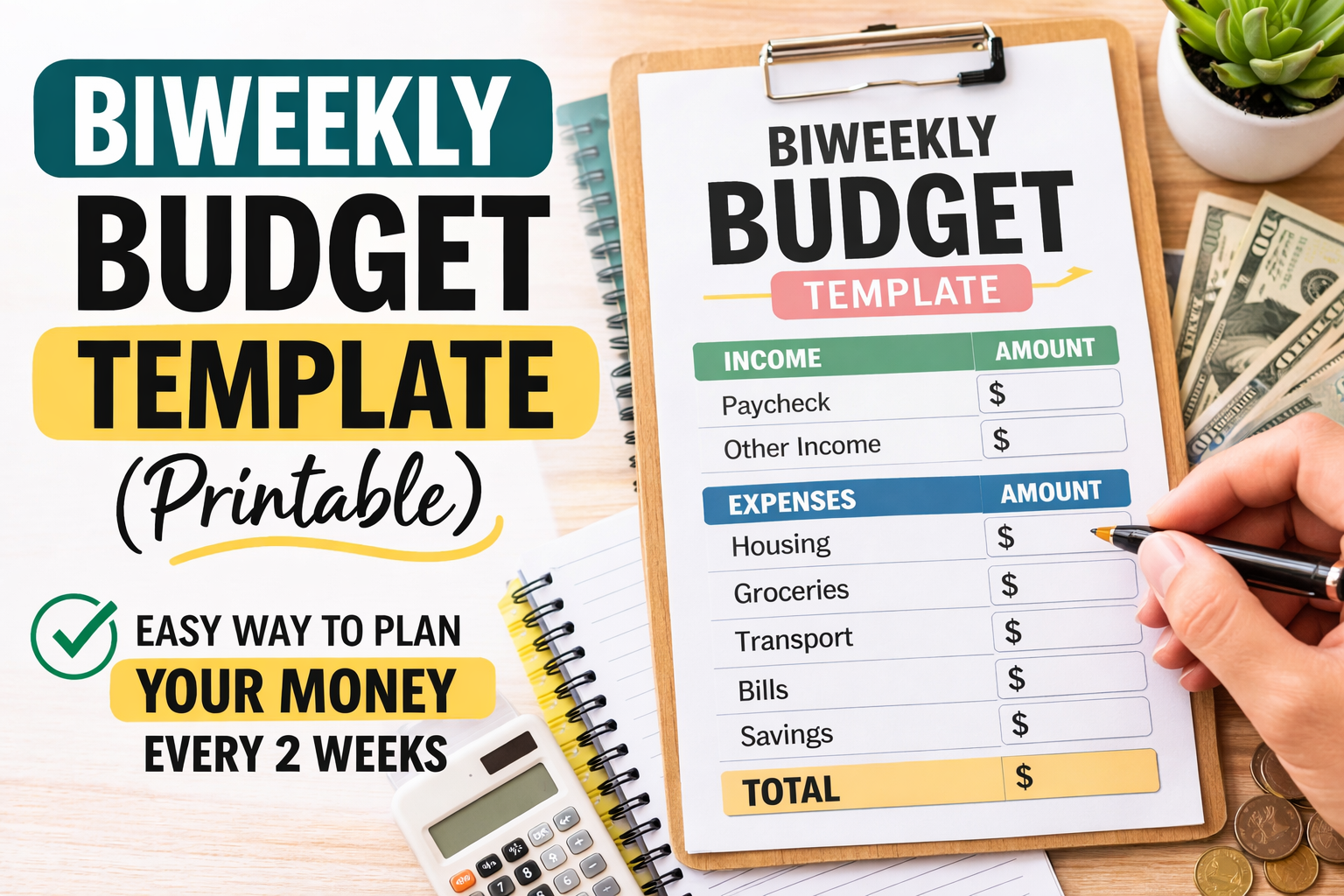
If you get paid every two weeks, a biweekly budget can make managing your money much easier.
Many people struggle with monthly budgets because their paychecks arrive every two weeks instead of once a month. A biweekly budget helps you match your spending plan with the way your income actually comes in.
In this guide, you’ll learn how a biweekly budget works, how to use a simple template, and how to organize your expenses so you always know where your money is going.
You’ll also find a simple biweekly budget template you can use to start budgeting right away.
Why a Biweekly Budget Helps
A biweekly budget is helpful because it aligns your spending plan with your paycheck schedule.
Instead of trying to stretch one monthly budget across several paychecks, a biweekly budget breaks your money into smaller, easier-to-manage periods.
Benefits of a biweekly budget include:
• Better control over spending
• Easier bill planning
• Less stress between paychecks
• Clearer tracking of income and expenses
Many people find that budgeting every two weeks feels more realistic than budgeting once per month.
What a Biweekly Budget Template Includes
A simple biweekly budget template includes three main sections: income, expenses, and remaining balance.
Income
List all income you expect during the two-week period.
Examples:
• Paycheck
• Side income
• Freelance work
Expenses
Next, list your planned expenses for those two weeks.
Common categories include:
• Housing
• Groceries
• Transportation
• Utilities
• Subscriptions
• Savings
• Debt payments
Remaining Balance
After subtracting your expenses from your income, you’ll see how much money you have left.
Simple Biweekly Budget Example
Here is a simple example of a biweekly budget.
Income
Paycheck: $2,000
Expenses
Rent: $800
Groceries: $200
Transportation: $120
Utilities: $150
Subscriptions: $50
Savings: $300
Total Expenses: $1,620
Remaining Balance: $380
This remaining amount can be used for extra savings, unexpected expenses, or personal spending.
Biweekly Budget Template
Use the simple template below to plan your own biweekly budget.
| Category | Amount |
|---|---|
| Income | |
| Paycheck | $_____ |
| Other Income | $_____ |
| Total Income | $_____ |
| Expenses | |
| Housing | $_____ |
| Groceries | $_____ |
| Transportation | $_____ |
| Utilities | $_____ |
| Subscriptions | $_____ |
| Debt Payments | $_____ |
| Savings | $_____ |
| Other | $_____ |
| Total Expenses | $_____ |
| Remaining Balance | $_____ |
Tip: Print this template or copy it into a spreadsheet to track your biweekly budget.
How to Use This Biweekly Budget Template
Using a biweekly budget template is simple.
Step 1
Write down your expected income for the two-week period.
Step 2
List your fixed expenses such as rent, utilities, and subscriptions.
Step 3
Add variable expenses like groceries and transportation.
Step 4
Subtract your total expenses from your income to see how much money remains.
If your expenses are higher than your income, adjust your spending categories until your budget balances.
Tips for Budgeting with Biweekly Paychecks
Budgeting with biweekly paychecks becomes easier with a few simple strategies.
First, plan your major bills around your paycheck schedule whenever possible.
Second, build a small buffer in your bank account so unexpected expenses don’t disrupt your budget.
Finally, review your budget every two weeks so you can adjust your spending as needed.
Consistently reviewing your budget helps you stay in control of your finances.
If you want to learn more about creating a full budget plan, check out these helpful guides:
• How to Build a Simple Monthly Budget
• Free Monthly Budget Template
• Weekly Budget Template
About the Author
Hi, I’m Akhila. I created Budgeting Made Simple to help beginners build clear, practical money systems without feeling overwhelmed.
My goal is to simplify budgeting, saving, and debt payoff into steps anyone can follow consistently. Personal finance doesn’t need to be complicated — it just needs structure and clarity.
Leave a Reply